Upon observing what has been going on here for the last couple of weeks, we noticed an alarming lack of product design. And our job here is to provide you with awesome art that you can appreciate and even buy (dead artists are featured weekly) - that's why we wanted to display the works of Ceri Hoover, a self-proclaimed "design-obsessed creator". This is not some etsy freak with glue gun, but an aesthetically sensitive designer with professional tools. Rate for yourselves!
Source: http://cooper-grey.myshopify.com/
(Also, we recommend visiting the blog)
Classic Artist of the Week #8 - Zinaida Serebriakova
Zinaida Serebriakova (nee Lanceray) was fortunate to be born in the late XIX century in a family with deep artistic tradition - they were nearly all painters, architects, poets or writers. It is no surprise then that young Zina decided to follow a similar career and went to study under Repin in her native Kharkov. She then traveled and studied at Italy and France. Serebriakova returned to Russia and stayed there despite her growing European fame and the October Revolution. Widowed with four children, she stayed true to her style while everyone else was creating in constructivism manner.
She managed to escape to Paris in 1924, yet her children stayed in the Soviet Union. Two of them joined them in the next four years. The two that stayed in USSR stayed there for the next 36 years.
Despite her tragic history, Serebriakova's paintings are full of beauty that she admired in both people and nature. They are full of light and lightness, painted in an effortless colours that indicate happiness and love. Reflect upon these short moments when we fully realize we're alive - that striking consciousness in ordinary moments. These moments are not beautiful because they are ordinary and perfect, but because we perceive them as ordinary and they SHOULD be ordinary, but they aren't. Like eating a breakfast without hurrying. Like smiling to oneself in a mirror. Like creating.
The painting with four children is however different. It meant to represent the painter's children after being orphaned.
She managed to escape to Paris in 1924, yet her children stayed in the Soviet Union. Two of them joined them in the next four years. The two that stayed in USSR stayed there for the next 36 years.
Despite her tragic history, Serebriakova's paintings are full of beauty that she admired in both people and nature. They are full of light and lightness, painted in an effortless colours that indicate happiness and love. Reflect upon these short moments when we fully realize we're alive - that striking consciousness in ordinary moments. These moments are not beautiful because they are ordinary and perfect, but because we perceive them as ordinary and they SHOULD be ordinary, but they aren't. Like eating a breakfast without hurrying. Like smiling to oneself in a mirror. Like creating.
The painting with four children is however different. It meant to represent the painter's children after being orphaned.
Mauro Fuke - Sculptures
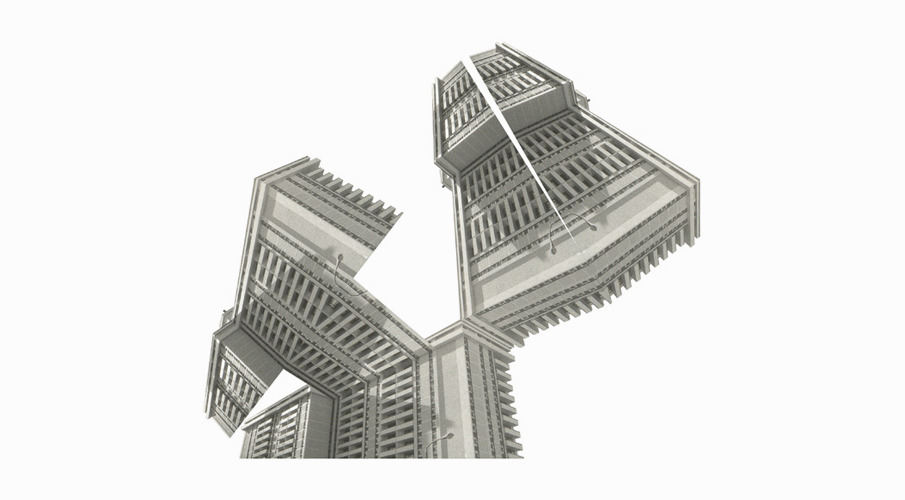
We already have one artist experimenting with math. This time, a Brazilian artist Mauro Fuke transfer the wonderful world of arithmetics and geometry into three-dimensional sculptures. Those are characterized by elegant, simple shape and imaginative forms.
Source: http://mauro-fuke-sculptures.blogspot.com/
Jay Shuster - Photography
"I take pictures of truisms, I also like to play around with the idea
that an image can initially look very familiar yet after looking at it
for a few more seconds you start to notice things un-familiar." - writes Shuster about himself. But his photomanipulations are one thing. I really like the clearness of his photographs - just the lines, the colors, nothing more. No unnecessary details that command your attention besides the photographed objects and space. Ascetic and pure, whether in destruction or futuristic daft punk themes.
Source: http://jayshuster.com/
Kiwilicious Jewelry #8 - Timewatch
More and more of us are (sadly - S.) no more sing the traditional watches - the time can be conveniently checked on your mobile. Fortunately, the gears and cogs of watches have found a new use - they form jewelry!
Timewatch is an etsy seller, who unfortunately doesn't share much information. Still, you can see her honest and professional approach to the client.
Patrick Gannon - paper cut-outs
Patrick Gannon is one of the people who can safely put "paper cuts" into "possible work-related injuries"on his insurance form. This American-Japanese artist creates his elaborate images through cutting pieces of colourful paper sheets from all over the world and placing them together in one. Both masterful execution of his rare technique and great composition supported with glowing ideas make his art so exquisite.
Source: http://www.pgannon.com/index.htm
Classic Artist of the Week #7 - Franz Xavier Messerchmidt
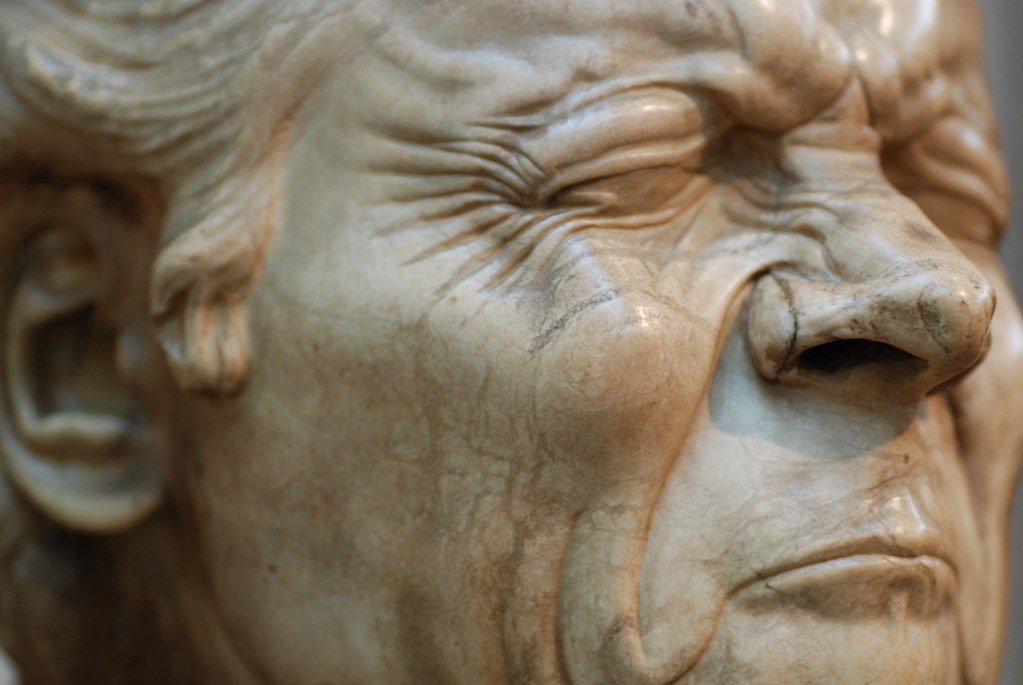
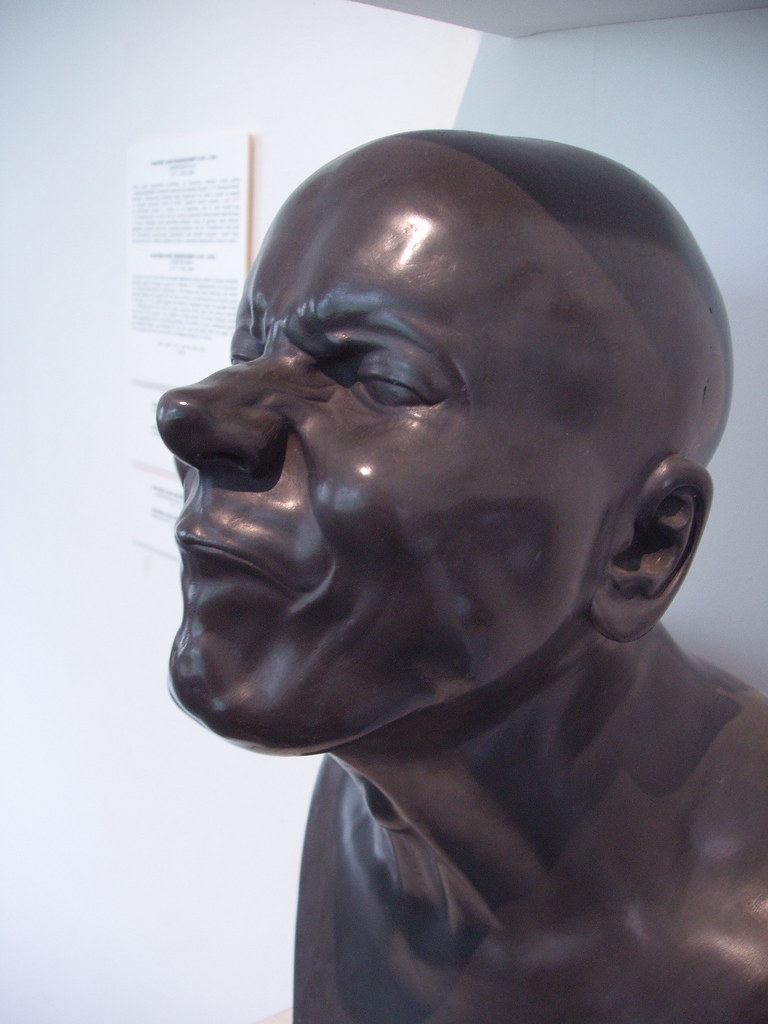
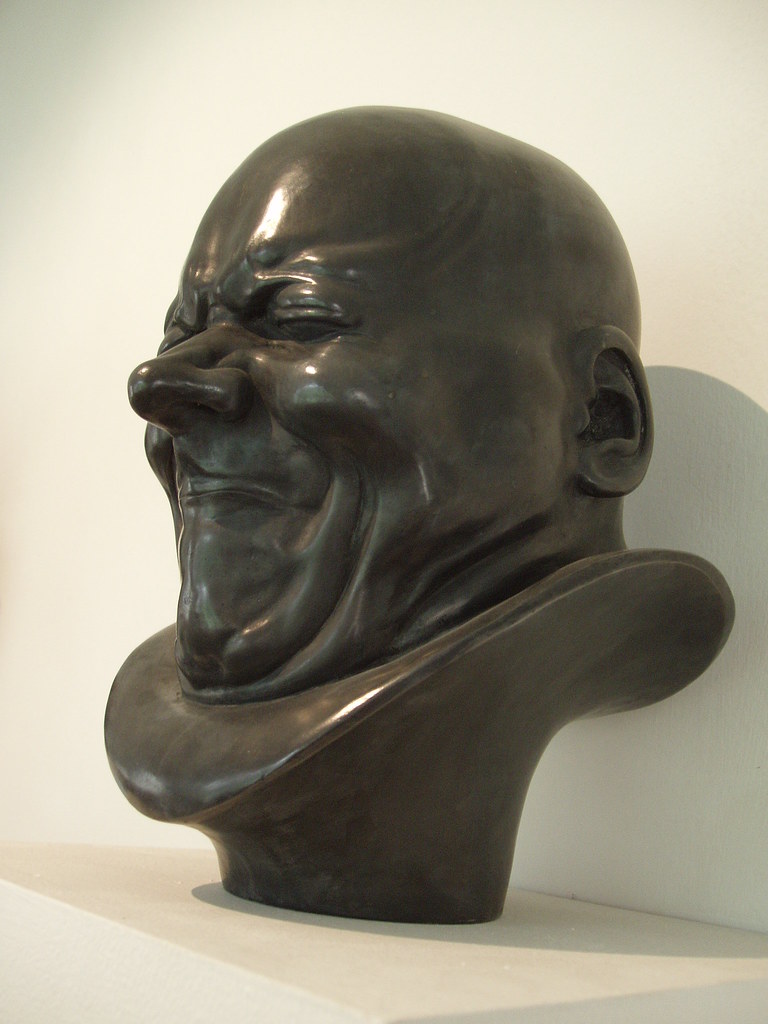
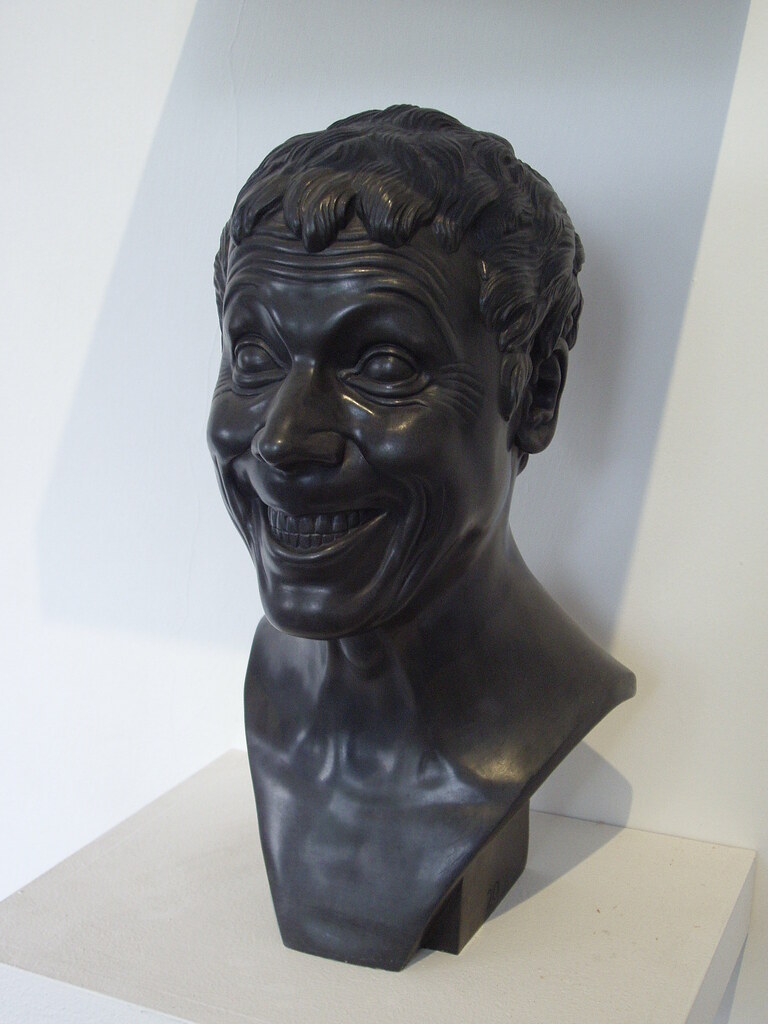
Today, we do not want to feature a well-known, honored artist or even lesser-known, but still famous creator that meddled with the course of the history of art. Instead, we want to present you someone relatively unknown even to those engrossed in art, someone so out of his time that his genius was considered a madness. Yes, we know about Van Gogh - but he waited "merely" about twenty years after his death to become famous. This man waited two and a half century. Ladies and gentlemen, Franz Messerschmidt.
Messerschmidt was born in 1736 and grew up in Germany with his uncle, a sculptor. He then finished the Academy of Fine Arts in Vienna and began work for the government. Pretty boring bronze busts, nothing that would separate him from other contemporary sculptors. When he was about 37, he started having episodes of paranoia and hallucinations. This is believed to have caused his obsession with physiognomy - the study of the human face.
Soon after that, he was thought of as a lunatic, despite his mastery in sculpture, and was forced to leave Vienna. Then Messerschmidt began full-time work on his busts representing horribly twisted and deformed human faces. But how. Deformed through expression. The Viennese madman tried to achieve what no one else, no matter how good, did not achieve - he tried to make the stone alive. It screams, gasps, exhales in a vain attempt to express the fear, the futility, the despair, anguish, surprise and every other emotion imaginable.
This is another example of a great intellect and bigger-than-life character lost partially because of the system and partially because of his own genius. Some say he was paranoid. I say he felt.
Pictures taken from Wikimedia Commons and Flickr.
Messerschmidt was born in 1736 and grew up in Germany with his uncle, a sculptor. He then finished the Academy of Fine Arts in Vienna and began work for the government. Pretty boring bronze busts, nothing that would separate him from other contemporary sculptors. When he was about 37, he started having episodes of paranoia and hallucinations. This is believed to have caused his obsession with physiognomy - the study of the human face.
Soon after that, he was thought of as a lunatic, despite his mastery in sculpture, and was forced to leave Vienna. Then Messerschmidt began full-time work on his busts representing horribly twisted and deformed human faces. But how. Deformed through expression. The Viennese madman tried to achieve what no one else, no matter how good, did not achieve - he tried to make the stone alive. It screams, gasps, exhales in a vain attempt to express the fear, the futility, the despair, anguish, surprise and every other emotion imaginable.
This is another example of a great intellect and bigger-than-life character lost partially because of the system and partially because of his own genius. Some say he was paranoid. I say he felt.
Pictures taken from Wikimedia Commons and Flickr.
Subscribe to:
Posts (Atom)